Eight-year-old Evan Miller watched a gray-haired man enter Cedar Creek Café wearing a faded work jacket, a baseball cap and boots caked with mud. A waiter looked at the man’s pockets and loudly suggested the soup kitchen was two streets away. Evan’s father was outside repairing a tire.
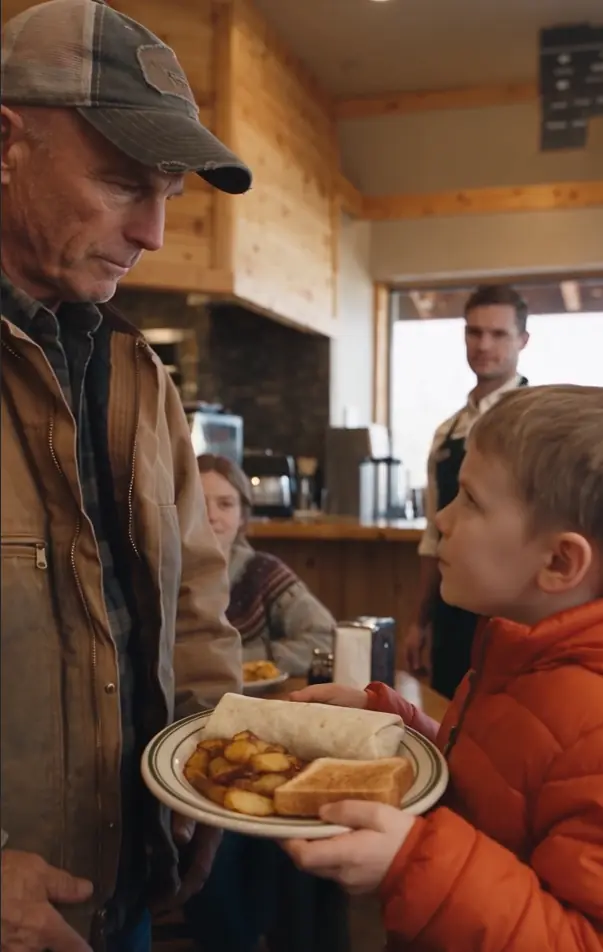
The stranger said he wanted only a glass of water while he waited. The waiter rolled his eyes. Evan pushed his untouched breakfast plate across the counter and said the man could eat it. The stranger looked startled, then accepted without turning the offer into a lesson.
Outside, someone was locking a bicycle against a railing while another person crossed the street with groceries. Such scenes once seemed distant from the questions consuming them. Now they understood that public systems reached into precisely those mundane routines. A record could determine whether a ride arrived or whether someone was allowed to enter a school. Getting the record right was not an abstract virtue.
When the door finally closed behind them, the place looked much as it had before. There were still chairs to straighten, bills to sort, and dishes to put away. Yet one practical thing had changed: the person who needed help was no longer trying to carry the whole account alone. That did not guarantee justice. It gave justice a better chance of being pursued carefully.
By the time they left, the facts had not become simpler. They had become more exact. One witness remembered a time but not a face. Another could identify a location but not the reason someone went there. That was enough to establish a direction for the next question, not enough to claim a final answer. The difference protected the people whose lives would be affected by whatever came next.
The hardest part was staying with the ordinary details. A dramatic accusation would attract attention, but a dated receipt could be checked. A moving story might earn sympathy, but a confirmed phone call could change an official account. Each small piece had to be considered for what it proved, and for what it did not. That patience was tiring, especially when someone needed help immediately. The question remained unanswered. Their work was not finished. They chose to proceed carefully. Someone needed to listen. It could not be ignored. The evidence still needed care. Each person understood the stakes. Nobody wanted another mistake. That detail would remain important. There was no easy answer. The truth could not depend on someone wanting a happy ending. There was more to learn.
On his way out, the stranger slipped Evan a folded paper with one address and a request: give this to your father, but do not go there alone.