The first boy appeared beyond the diner's glass door at eleven forty-seven on a Thursday night, his fist pressed against the pane. Rain struck the window so hard that Marcus Reed could barely hear the knocking. The boy was perhaps eleven, skinny beneath an oversized green coat, with wet brown hair plastered to his forehead. He was supporting a smaller child who seemed unable to stand without him. Across the highway, headlights moved through the storm and vanished. Nobody slowed. Marcus had already stacked the chairs and emptied the coffee urn. He was the only employee left, and the diner owner had warned him never to open after closing. Three robberies had happened nearby that winter. The safer decision was to call the police from inside and leave the doors locked. Then the older boy lifted his brother's face toward the glass. The younger child's lips were pale. Marcus unlocked the door. The wind pushed both children into his arms. The older one tried to speak, but his teeth chattered so badly that the words broke apart. Marcus pulled them inside, grabbed clean kitchen towels, and steered them toward the booth nearest the heater. “You're safe in here,” he said, though he did not yet know if that was true. He found dry aprons for their shoulders, warmed soup left from the dinner service, and called emergency dispatch. The older boy refused to release his brother's hand. “We weren't supposed to stop,” he whispered. Marcus crouched beside them. “Who told you that?” The boy glanced at the dark windows. “The man driving.” Marcus looked outside. For a second, he thought he saw a vehicle idling across the highway. Then lightning flashed and the road was empty.
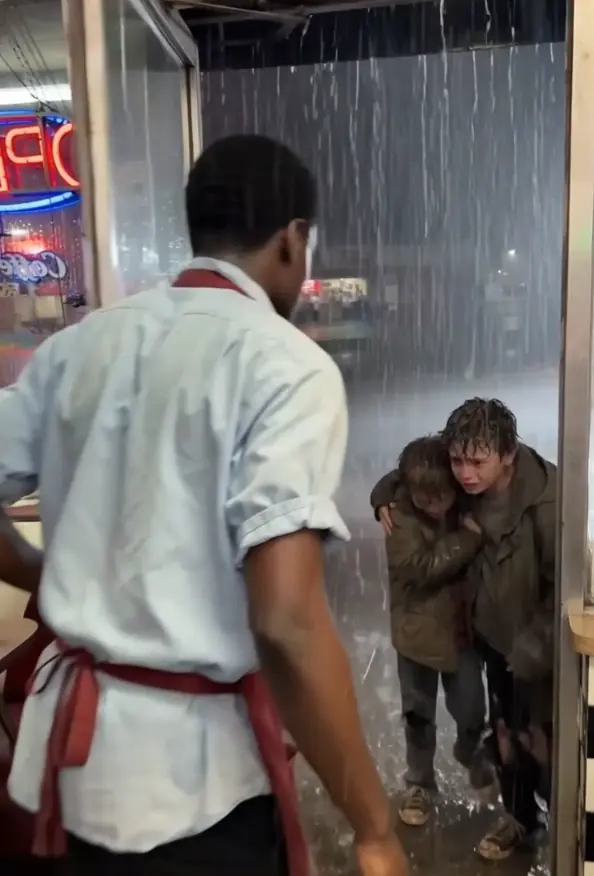
Marcus had worked at the Route Nine Diner for nine years, long enough to recognize hunger disguised as politeness. He understood that children might hide important details because they were frightened, ashamed, or protecting someone. He did not ask them to explain everything before offering warmth. He simply kept his voice low, moved the hot bowls away from trembling hands, and told the dispatcher exactly what he could see, rather than guessing at what had happened.
The storm had been building since late afternoon. At sunset the wind bent the roadside sign until its bolts groaned, and a county warning advised drivers to avoid low crossings. Marcus had considered leaving early but stayed to mop the floor and close the books because another worker needed to get home to a sick parent. That delay seemed inconvenient at the time. He waited. He listened.
When the older boy finally gave Marcus their names, he added something more unsettling: “Please don't let him take us back.”