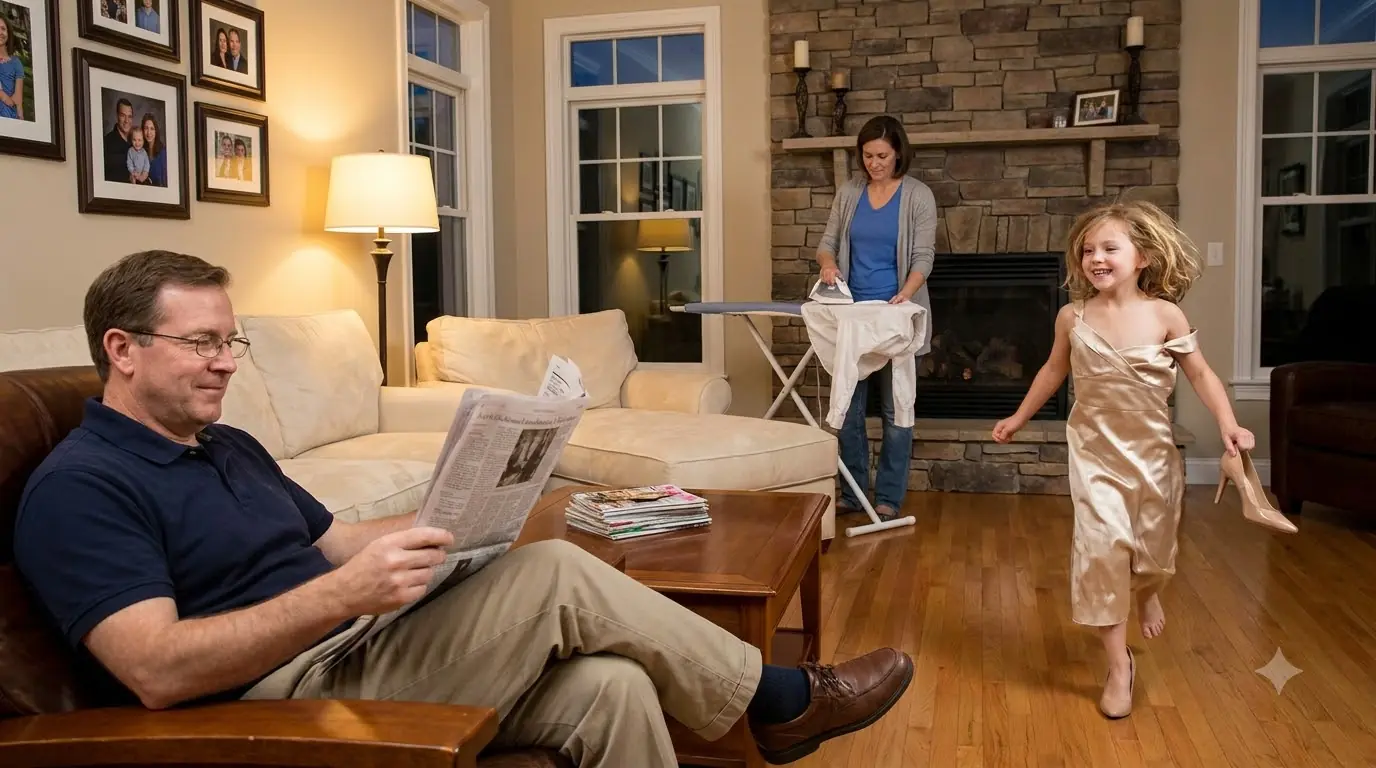
They were not unhappy. Unhappy is a clean word. They were worn. Worn looks like kindness if you do not look long. Greg’s hazel eyes had the tired kindness of a man who still opened jars and still remembered Helen’s coffee and still thought remembering was the same as remaining. Helen’s claw-clip Saturdays were a form of love: she made the house run so the house could be a place a child ran through.
The colleague’s name was Jess.
Greg did not bring Jess home in stories the way a man brings a threat home. He brought her home in small harmless mentions. Jess on the new software. Jess who stayed late. Jess who had a joke about the vending machine. Helen had met her once at a summer picnic, a younger woman with a laugh that arrived first and a dress that already looked like a different life. Helen had said, afterward, “She seems bright.” Greg had said, “She’s good at her job.” Both sentences were true. Neither sentence was the whole inventory.
The staying late became a pattern the way staying late always becomes a pattern: first as necessity, then as preference, then as a door a man can walk through without calling it a door. Greg told himself he was lonely in the way employed people are lonely, surrounded and untouched. He told himself Helen was tired of him in the specific way a wife is tired of a husband she still folds shirts for. He told himself a conversation in a parking lot was not a crime. Then the parking lot became a drink. Then the drink became last Saturday night.
Last Saturday Helen had taken Lucy to her sister’s for a birthday that ran long. Pizza. A blow-up castle. A child who did not want to leave. Helen had texted Greg: Home late. Don’t wait up. He had texted back: Okay. Drive safe. He had not been at home when he sent it. He had been in the living room of a rented-feeling apartment that smelled like new carpet and a candle trying too hard. Jess had said the company was killing her. He had said the company was killing him. Two people blaming a building is how a lot of rooms get used.
He told himself he would not stay. Staying is a series of minutes that do not announce themselves as staying. A second drink. A sentence about how Helen used to laugh at his jokes. A hand that was not his wife’s hand. The champagne dress was what Jess had worn to a dinner that was supposed to be colleagues and had become the other thing. In the morning — not morning, the late night that pretends it is still Saturday — the dress ended up over a chair in the Porters’ guest room because Greg, in a panic that thought it was caution, had said they could not go back to her place again that close to a school week, and Jess had come to the house that was supposed to be empty, and the house had not stayed as empty as the text had promised.
Lucy had been asleep at her aunt’s. Helen had driven home after ten with a child drooling on a booster seat. Greg had met them at the door in the navy polo, hair damp from a shower that had been too fast. The guest-room door was closed. He said the evening had been quiet. Helen said Lucy was sticky with cake. They did the ordinary dance of a family coming in from a night. He carried Lucy. He did not look at the hallway as if the hallway could testify.