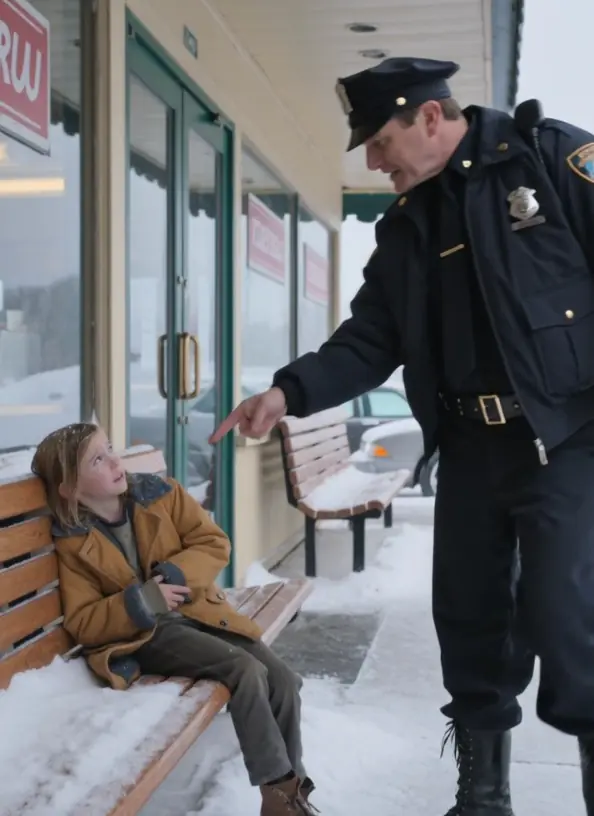
Snow gathered on the shoulders of the little girl sitting outside the Bellweather Diner. Her yellow coat had lost a button, one glove was torn, and her boots were too large for her feet. She sat so still that passing drivers might have mistaken her for a forgotten bundle of winter clothes. Every few minutes she lifted her head to look at the road. Then she checked the folded piece of paper clenched in her hand, as though reading it again could make someone arrive sooner. Officer Grant Heller noticed her while making his afternoon rounds. He had received a complaint about someone sleeping on the bench outside a local business. He approached with the brisk impatience of a man already late for another call.
Lena watched the officer from behind the steamed window before she moved. Sophie's eyelashes were rimmed with melting snow, and the scarf at her throat was tied in the clumsy knot a child makes without help. A woman at the nearest table looked away when Lena caught her watching. Lena put down the dishcloth and chose the door. They had memories, fragments of paper, and reasons to be careful. Lena found it tempting to fit the fragments into a pattern right away, but each time that impulse appeared, a new detail challenged it. The truth, whatever it proved to be, would have to survive questions rather than depend on everyone agreeing too soon. Outside the diner, people still had errands to run and appointments to keep. Lena watched it for a moment, then returned attention to what could actually be done: listen closely, keep promises small enough to honor, and avoid making anyone's fear into a spectacle. There was no value in making this sound neater than it was. Sophie would have to live with the consequences after the conversation ended. Whatever decision came next should be based on a fact they could return to, not a promise made to quiet the room. Lena understood something that had once seemed too small to name: dignity can be preserved or damaged by the tone of a single question. there was still hope.
'You can't stay here,' he told her. 'Where are your parents?' The girl looked up, frightened. She said she was waiting for her mother. Heller asked how long. She did not answer because she did not know. He told her the bench was private property and that she needed to move along. Inside the diner, waitress Lena Brooks saw the exchange through the glass. She had been clearing dishes when she noticed the child's cracked lips. Lena knew that look: exhaustion turned into obedience because protesting would take energy a person no longer had.