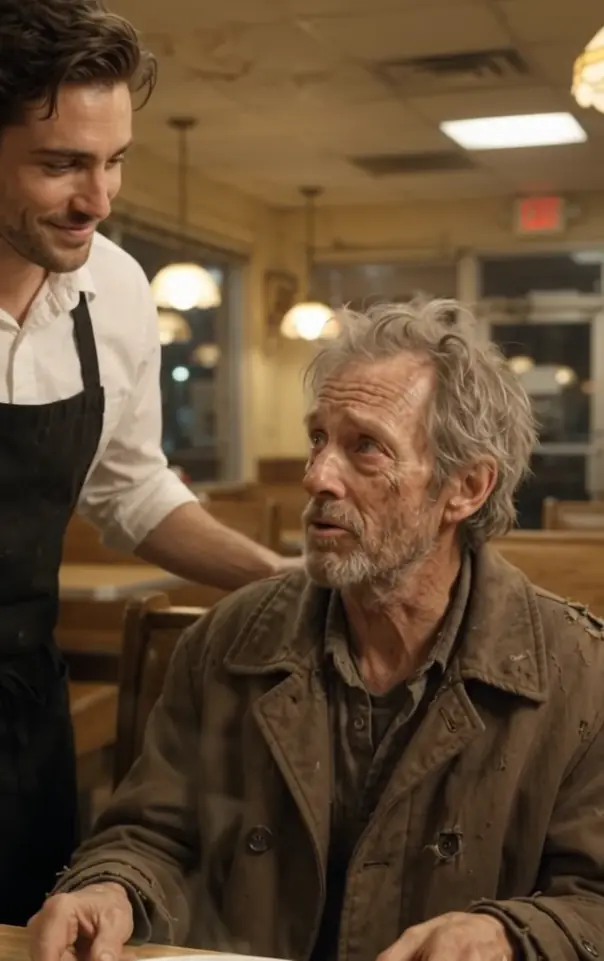
Nathan Hale notices a weathered man named Silas Ward sitting alone with water at Delaney’s Grill. Silas has not eaten all day. Nathan buys him a hot meal with his own wages, puts the receipt in his pocket and tells Silas he is welcome to take his time. Outside, the neighborhood carried on.
A delivery truck reversed; a woman hurried toward a bus; somebody complained about the weather. Nathan found that ordinary noise unsettling. A private catastrophe could be unfolding while the street behaved as if it were any other day. The next conversation happened in a place that offered little privacy.
A person at the far table kept glancing up whenever the tone changed. Nathan lowered their voice and suggested moving the sensitive details somewhere quieter. Protecting someone from gossip was not the same thing as withholding information from the people responsible for acting on it. A practical decision needed more than good intentions.
It needed permission where permission was required, a responsible person to follow through, and an answer to the question of what might go wrong next. Someone suggested handling the problem quietly, as though silence could be another name for kindness. Keeping an individual's private life out of gossip was one thing; hiding a hazard or a false record was another. The distinction took patience to explain.
"I do not want a story that sounds better than the truth," Nathan said. "I want one we can check." During a long pause, Nathan watched the other person straighten a folded page twice. The paper was not particularly valuable, but it was the only original they had kept.
Nathan offered to make a copy and return the page immediately. Keeping custody clear was a quiet form of respect. Nobody who had suffered was required to be grateful for the investigation. Nathan understood that a correct record could be important and still arrive painfully late.
Relief did not automatically replace grief. Nobody in the room agreed immediately about the right course. One person favored a public confrontation, another worried about innocent people being drawn into it, and a third asked whether anybody had consulted those most affected. Nathan realized disagreement was useful when it forced the group to become more precise.
"What happens to the people who are still waiting?" Nathan asked. Nobody answered quickly. When an older document was finally laid beside a newer one, the differences seemed embarrassingly small: a date, a street name, a signature line. Yet those details had shaped decisions made about real people.
Nathan considered how easily an error could become accepted history when it was copied enough times. Manager Victor Crane sees the plate and starts shouting before Silas lifts a fork.