The wind off the Detroit River did not blow that night. It screamed.
It came down the empty avenues like something with teeth, carrying ice crystals that cut against brick and steel and exposed skin, and it filled the boarded-up factories with a low, mournful howl that sounded almost human.
The thermometer on the bank sign at the corner of Jefferson and Woodward read minus 19 degrees, and it was still falling.
The streetlights along the industrial corridor flickered against the snow, casting long, broken shadows across drifts that had already swallowed the parked cars.
The plows had given up hours ago.
The city had locked its doors.
The free clinic on Mack Avenue had been open for nine years.
Maggie Whitlock had signed the lease on a Tuesday in March of the year after her son died, and she had painted the walls herself, alone, on a series of weekends when she could not bear to be inside her own house.
The sign above the door read WHITLOCK FREE CLINIC in letters she had stenciled by hand.
Below the name, in smaller letters, were four words she had chosen carefully.
NO QUESTIONS. NO CHARGE.
In nine years, she had not turned a single person away.
She had stitched knife wounds at two in the morning. She had set broken fingers for women who would not say how the fingers had been broken.
She had counseled teenage girls who could not go home and old men who had nowhere else to go.
She kept a cot in the back room and a coffee pot that was never empty.
The men of the Detroit Charter had built her a small steel safe behind the reception desk, where she kept medications that pharmaceutical representatives brought her quietly because she had earned, in nine years, a kind of reputation that crossed lines that did not usually get crossed.
That night, the night of the storm, she had stayed at the clinic until almost eleven.
A boy of 17 had come in at nine with a deep laceration on his forearm.
He had not wanted to talk about how it happened.
She had not asked.
She cleaned the wound, stitched it closed, gave him antibiotics and a sandwich, and sent him out into the snow with a wool hat she kept in a basket by the door for boys who came in without one.
Then she locked up.
She set the alarm.
She got into her sedan, the one Beau had bought her for their 20th anniversary, and pointed the car west on Mack Avenue toward home.
She called Beau from the parking lot.
"I'm headed home, honey."
"The roads are bad, Mags. Take it slow."
"I always take it slow."
"I know you do. I love you."
"I love you, too. I'll be there in 40 minutes."
She hung up.
She pulled out of the parking lot.
She had no way of knowing that a black pickup truck had been sitting in the lot of the abandoned gas station across the street for the last hour, waiting for her.
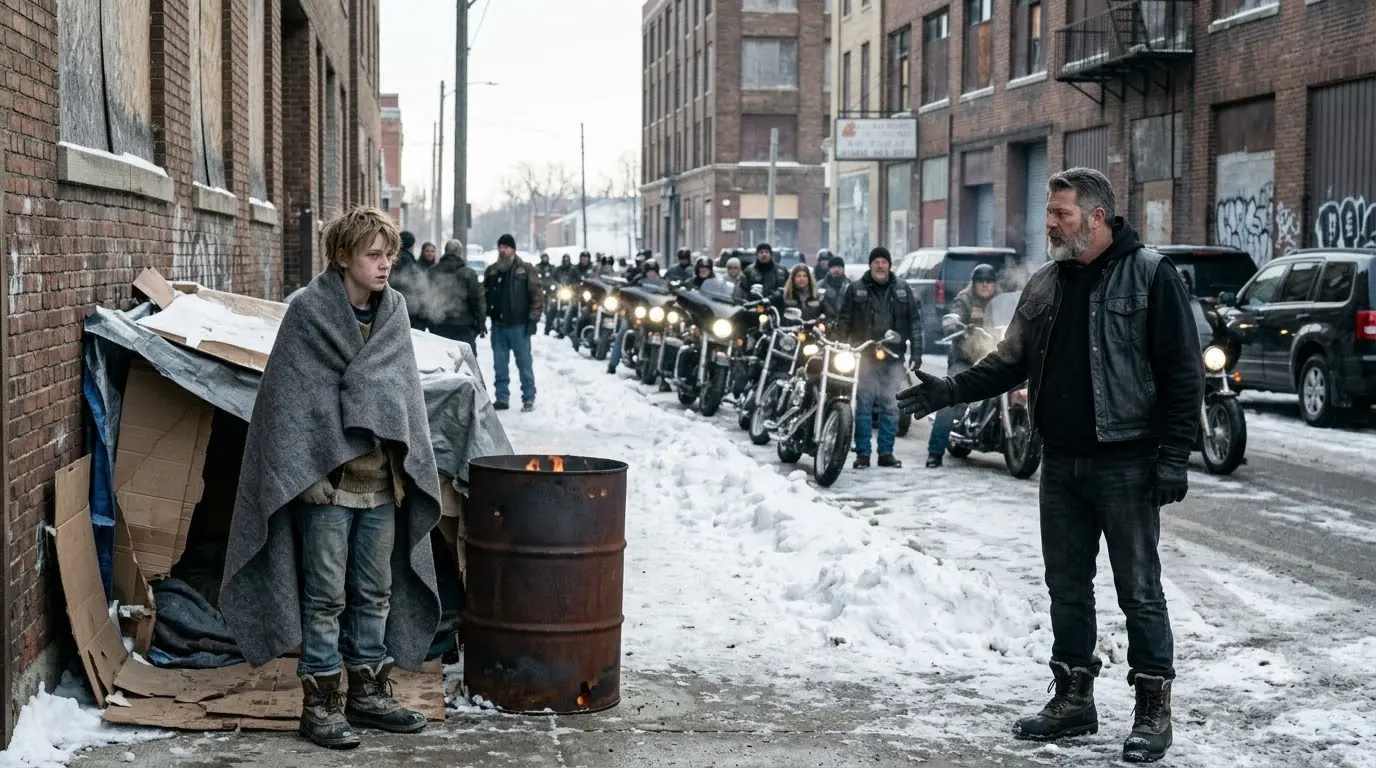
In a narrow alley between a condemned auto-parts store and the rusted skeleton of an old stamping plant, a boy curled himself into the smallest shape a body could make.
His name was Eli Carter.
He was 14 years old and weighed 90 pounds soaking wet.
He had not eaten anything since the half of a turkey sandwich he had found in the dumpster behind the deli on Tuesday afternoon.
That sandwich was now wrapped in a piece of newspaper inside the front pocket of his canvas parka.
He had been rationing it for two days.
Three small bites a day.
He told himself that was enough.
He told himself a lot of things to keep moving.
Eli had run away from his foster home in Toledo when he was 12.
The man who was supposed to be his father had a temper that came out of a bottle, and the woman who was supposed to be his mother had a way of looking through him as if he were a window onto something unpleasant.
Eli had taken his mother's old wool blanket, the only thing left of her, and walked out the back door one summer night.
He never went back.
He had ridden freight trains north.
He had slept in libraries, church basements, and underneath the bleachers of high-school football fields.
He had learned which dumpsters held the cleanest food, which alleys belonged to which men, and which steam grates pushed out warm air in the deep winter months.
His mother had died of cancer when he was nine.
Her name was Hannah.
She had hair the color of wheat and a laugh that sounded like wind chimes.
On her last day in the hospital, she had held his small hand in both of hers and told him that he was going to build beautiful things one day.
Eli wanted to be an architect.
He wanted to design houses that were always warm.
He had a notebook he kept inside his shirt against his skin, and in it he drew floor plans by candlelight.
Houses with thick walls.
Houses with fireplaces in every room.
Houses with no locks on the bedroom doors.
He had never known his father.
His father was a name on a piece of paper, a man who had died in some kind of accident in Pittsburgh when Eli was six, before memory had really taken root.
His mother used to say his father was a good man who worked with his hands and loved his family.
That was all Eli had.
A name and a sentence.
Tonight the cold was different.
Eli had survived two Detroit winters by knowing the city's secret warm places, but tonight the cold had teeth that found him through three thrift-store sweaters and an oversized canvas parka and his mother's wool blanket pulled up over his head like a shroud.
He breathed into the small dark cave he had made of himself and tried to keep the air warm against his face.