When I first saw the lake, almost nobody wanted it.
The shoreline was buried beneath weeds, dead branches, and years of neglect.
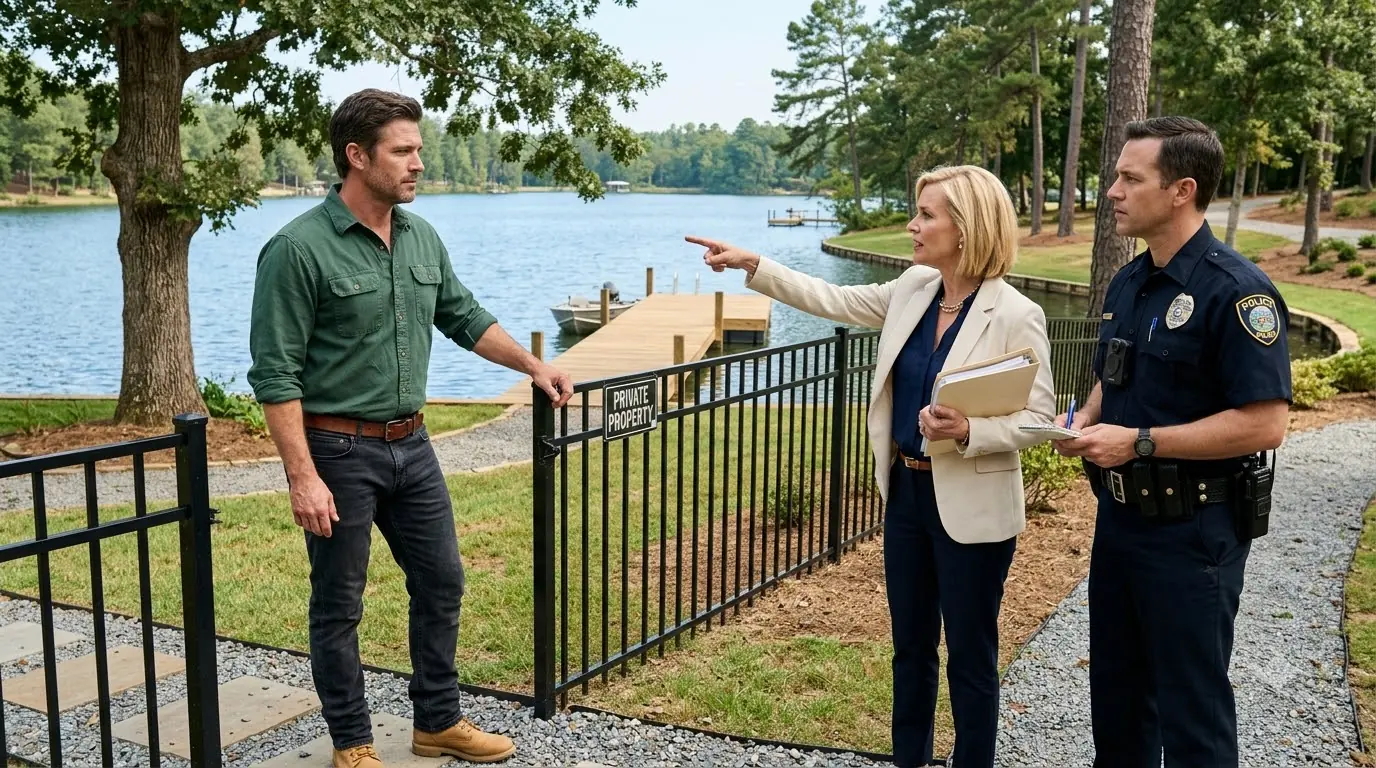
Half the old wooden dock had collapsed into the water, cattails had swallowed the southern bank, and storm debris had collected against one corner so thickly that you could almost walk across it.
To most people, it looked like a liability.
To me, it looked like something worth saving.
The lake sat on a neglected thirty-eight-acre property at the edge of a subdivision called Hawthorne Ridge.
Technically, calling it a lake was generous.
It had originally been built as a private agricultural impoundment decades earlier when the surrounding land still belonged to one family. A spring-fed creek entered from the north, a small earthen dam held the water along the southern edge, and generations earlier the property had supported cattle, orchards, and several acres of pasture.
By the time I saw it, the farm was gone.
The barn had collapsed years before.
The fields had grown wild.
Only the lake remained.
Hawthorne Ridge had been developed along the eastern side about fifteen years earlier, but the lake parcel itself had never been incorporated into the subdivision.
That distinction would eventually become the entire story.
At the time, I barely noticed it.
I had been looking for a quiet piece of land for nearly three years.
I wanted somewhere with water, enough space for trees, and enough distance from neighboring houses that I could sit outside without hearing somebody’s television through an open window.
I was not interested in building a resort.
I was not planning a business.
I wanted land.
The listing had been sitting online for almost eleven months.
The photographs were terrible.
One showed brown water beneath a gray winter sky.
Another showed the ruined dock leaning at an angle.
The listing description called the property “unimproved acreage with water feature.”
Water feature.
That was how little anyone seemed to value it.
I called the real estate agent.
“Has anyone made an offer?”
“A few inquiries.”
“Any serious ones?”
She hesitated.
“No.”
“Why?”
“The lake needs work.”
“How much?”
“That depends on what you consider work.”
I drove out the following morning.
The entrance road was barely visible.
Saplings had grown along both sides.
The first hundred feet were gravel, then dirt.
When I reached the water, I understood why buyers had walked away.
The lake was beautiful underneath the neglect, but you had to use imagination.
The northern shoreline had eroded in two places.
A fallen oak lay partly submerged near the west bank.
The old dock looked dangerous enough that I did not step onto it.
Trash had accumulated near a former access path.
Plastic bottles.
Fishing line.
An old lawn chair.
Two broken coolers.
Someone had dumped several tires near the woods.
But the water itself surprised me.
I knelt near the edge.
It was clearer than the photographs suggested.
Small fish moved beneath the surface.
Dragonflies hovered near the reeds.
A pair of ducks lifted from the far side when I approached.
The property was not dead.
It was simply neglected.
I walked around the entire lake that afternoon.
It took almost two hours.
By the time I returned to my truck, I already knew.
I wanted it.
But wanting land and buying land are different things.
I had learned that lesson years earlier from my father, who used to tell me never to fall in love with property before reading what was attached to it.
So before making an offer, I did everything I was supposed to do.
I hired a title company.
I ordered a boundary survey.
I requested historical deeds.
I had an attorney review the purchase documents.
I checked county tax records.
I checked drainage restrictions.
I reviewed access agreements.
I specifically asked whether Hawthorne Ridge Homeowners Association had any interest in the lake.
The answer came back clearly.
No.
The thirty-eight-acre parcel was separate.
It had its own legal description.
Its own parcel number.
Its own tax assessment.
Its own recorded chain of title.
The lake sat entirely within that parcel.
More importantly, the land beneath the water was included.