USS Tullibee Fired at a Japanese Convoy in 1944—Then Its Own Torpedo Apparently Turned Back and Sank It
On the night of March 26, 1944, the American submarine USS Tullibee was hunting Japanese shipping near the Palau Islands in the western Pacific. Its crew had spent months operating in dangerous waters, searching for enemy vessels carrying supplies essential to Japan's war effort.
Shortly before midnight, the submarine found an opportunity to attack.
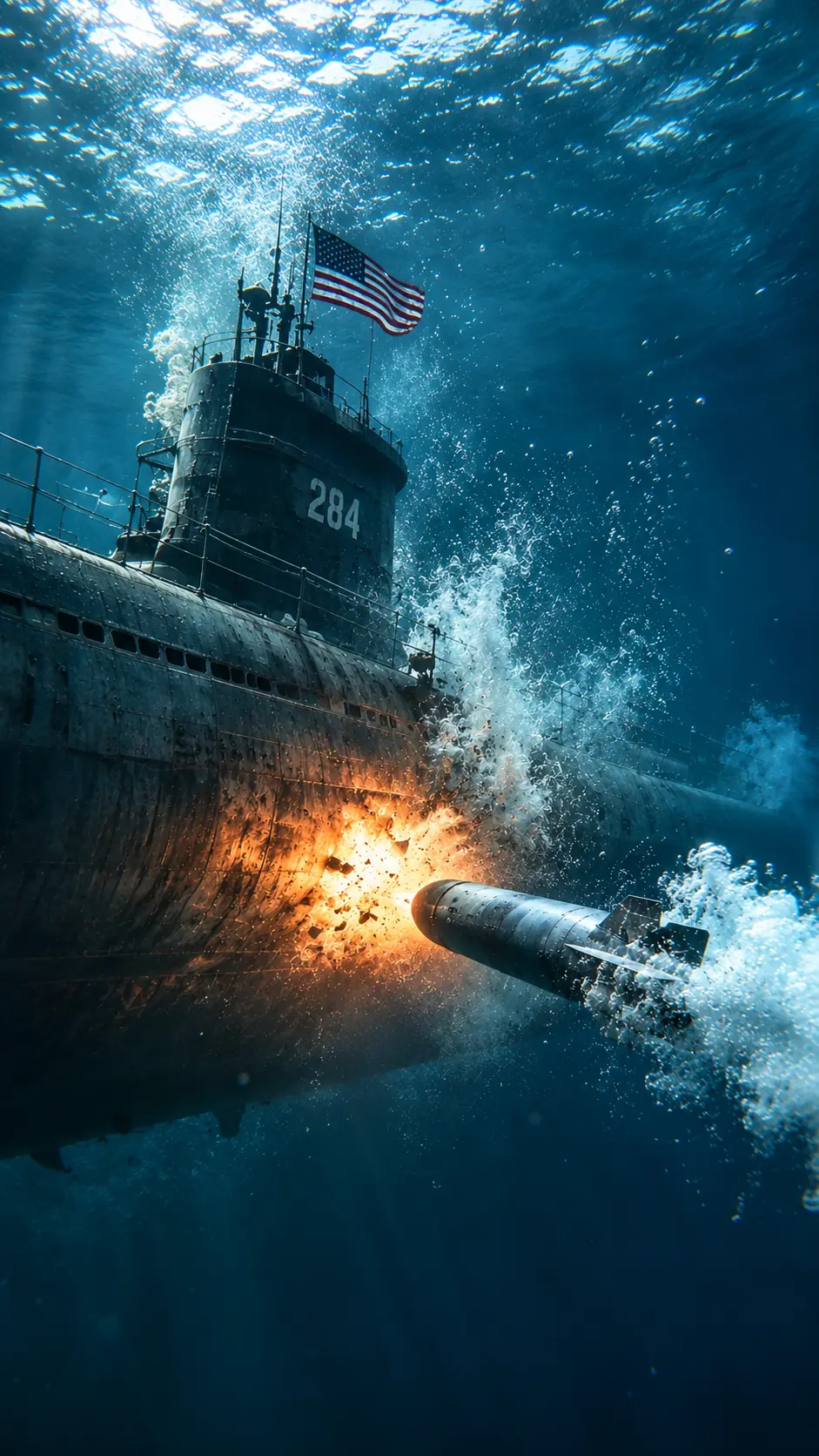
A Japanese convoy was moving through the darkness. Tullibee maneuvered into firing position, and its commanding officer, Lieutenant Commander Charles F. Brindupke, ordered torpedoes launched toward an enemy vessel.
Two torpedoes left the submarine.
Approximately two minutes later, a tremendous underwater explosion shattered the night.
But the explosion did not produce the victory the American crew had expected.
Instead, USS Tullibee was catastrophically damaged and sank.
The most widely accepted explanation is that one of its own torpedoes malfunctioned, traveled in a circular course, and returned to strike the submarine that had fired it.
Of the 60 men aboard, 59 were lost.
Only one survived: Gunner's Mate Second Class Clifford W. Kuykendall, who was thrown into the water by the explosion.
He would spend the remainder of World War II as a Japanese prisoner of war.
The sinking became one of the most disturbing incidents in American submarine history—a disaster in which the weapon intended to destroy an enemy ship apparently destroyed its own crew instead.
A Submarine Built for America's Pacific War
USS Tullibee (SS-284) was a Gato-class submarine, one of the principal types used by the United States Navy during World War II.
Built by the Mare Island Navy Yard in California, the submarine was launched on November 11, 1942, and commissioned on February 15, 1943.
It was named after the tullibee, a freshwater fish found in North America.
The Gato class represented a major step forward in American submarine design. These vessels were built for long-range operations across the vast Pacific, where distances between bases and patrol areas could stretch thousands of miles.