Cameron did not look at him. He looked at Noah. "Luck is what people call it when they don't want to admit they were wrong."
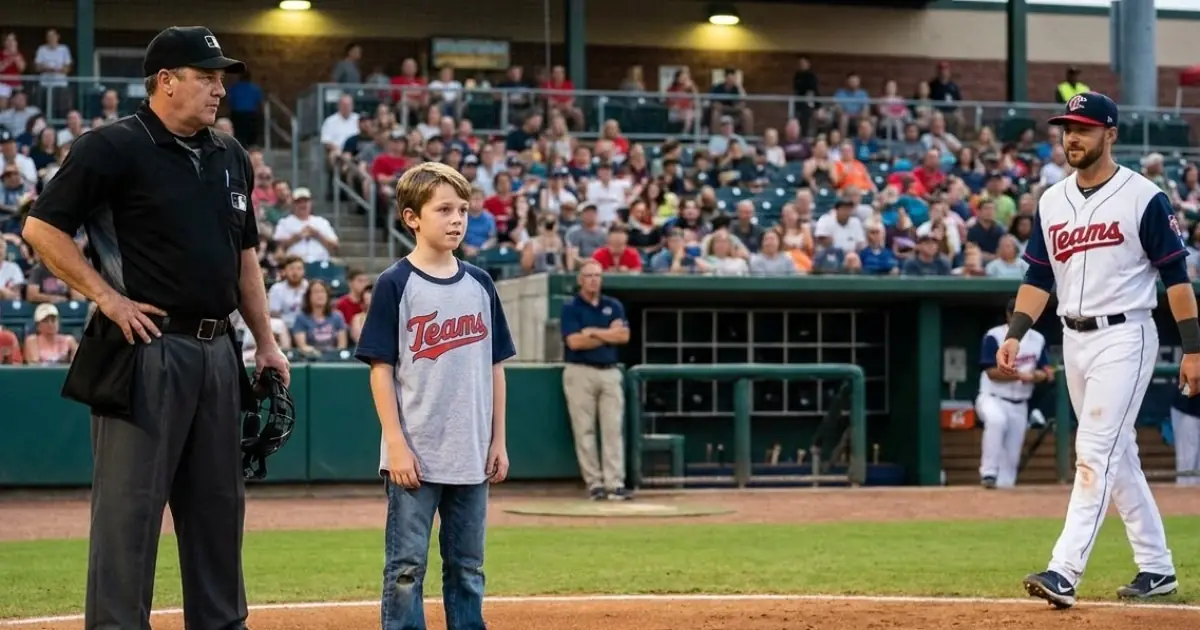
The between-innings clock on the scoreboard bled down toward zero. A stadium attendant hurried over with the clipboard and a foil coupon for free fries. The pitching machine was wheeled away. The game had to resume. But something in the air near home plate had changed temperature, and everyone standing in that circle of bright dirt could feel it.
Noah Bennett lived in a second-floor apartment three miles from the stadium, above a laundromat that exhaled warm lint and fabric softener into the stairwell every evening. The walls were thin. The windows stuck in summer. His mother, Denise Bennett, worked doubles at a roadside diner where the coffee was stronger than the tips and the night shift smelled of grease and bleach and other people's leftovers. She was thirty-four, tired in the way of people who love their children more efficiently than they love themselves, dark hair always pulled back, soft smile that arrived late and left early. Noah's father lived two states away with a new wife and a dog Noah had never met and a phone number that went to voicemail more often than it went to a human voice.
Noah had learned baseball the way some children learn silence: by watching and wanting. There was no organized league in his budget. There was a cracked bat from a yard sale, a scuffed ball with a soft spot, and the empty lot behind the laundromat where weeds grew through concrete and the city lights made poor substitutes for field lamps. He swung until his shoulders burned. He threw against the brick wall until the rebound taught him hop and spin. He dreamed in box scores he could not yet afford to sit through from good seats.
The free ticket night had been a diner customer's leftover gesture — two tickets pressed into Denise's hand with a receipt and a "take your boy." She had swapped a shift. They had sat in the upper deck where the view made the players look like careful toys and the hot dogs cost more than dinner at home. When the fan challenge was announced, Noah had gone quiet the way he went quiet before anything that mattered. Denise had said, "You don't have to." He had said, "I want to." She had watched him walk down the concrete steps toward the field and had pressed both hands together in her lap as if prayer and panic used the same muscles.
After the hit, Cameron Blake found them near the exit tunnel where the crowd thinned into families and the night air cooled against sweatshirts. He still wore his game jersey. Grass stains marked one knee. He held the bat Noah had used — his bat — and offered it again, not as a loan this time but as a decision.