The winter of 1888 came early to the mountains outside Silver Creek, Colorado.
By the first week of December, the peaks surrounding the valley had disappeared beneath thick layers of snow.
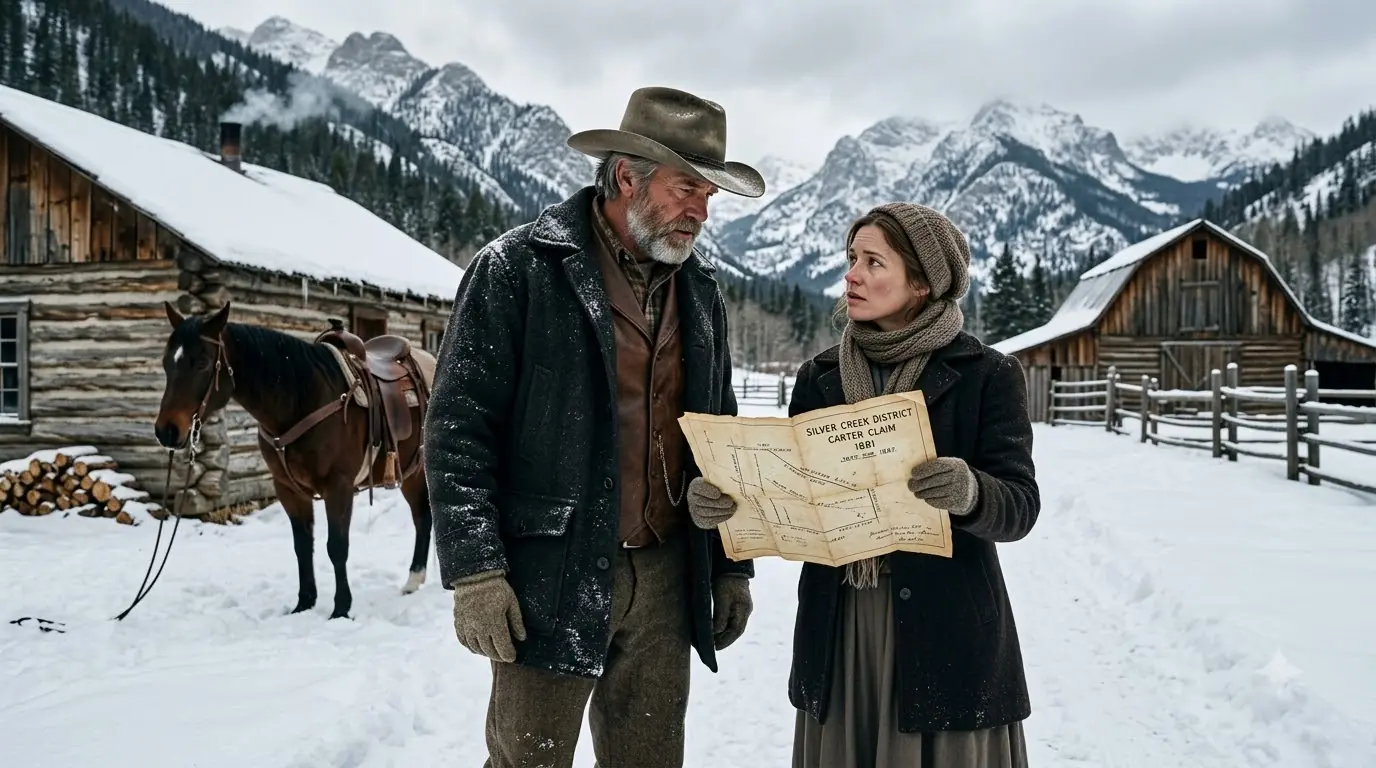
The pine forests stood silent beneath white blankets, and the narrow trails that connected ranches and settlements became dangerous paths where one wrong step could leave a traveler lost for days.
Men in town often said the mountains had a personality.
Some days they were generous, giving hunters game, miners silver, and ranchers enough land to survive.
Other days, they reminded everyone that they belonged to the mountain, not the other way around.
Elias Whittaker understood that better than most.
For nearly thirty years, he had lived among those mountains.
He had built his ranch with his own hands, one fence post, one barn beam, and one winter at a time. He had fought storms, sickness, wild animals, and the kind of loneliness that slowly settled into a person until they stopped noticing it was there.
At fifty-eight years old, Elias had become a man people in Silver Creek respected but rarely knew.
They knew he was reliable.
They knew he paid his debts.
They knew his cattle were some of the strongest in the county.
They knew that if a neighbor needed help repairing a fence after a storm, Elias would show up before sunrise without asking for payment.
But they also knew something else.
Elias Whittaker kept people at a distance.
He attended town meetings when business required it.
He spoke politely at the general store.
He nodded to neighbors when they passed on the road.
But when evening came, he returned to his cabin three miles beyond the edge of town and closed the door behind him.
People had stopped asking why years ago.
Everyone knew the story.
Or at least they thought they did.
Twenty-two years earlier, Elias had been married to Mary Whittaker.
Mary had been the kind of woman people remembered.
She laughed easily.
She sang while cooking.
She knew every neighbor’s birthday and every child’s favorite candy.
She had once told Elias that a house was not made from wood and nails.
A home was made from the voices inside it.
At the time, Elias had laughed.
He had been young, stubborn, and convinced that working hard was the same thing as building a life.
He spent most days away from the cabin.
Checking cattle.
Repairing fences.
Trading supplies.
Following trails deep into the mountains.
Mary never complained.
At least, not directly.
But Elias remembered the small things.
The way she watched him leave in the morning.
The way she stood on the porch until he disappeared beyond the trees.
The way she sometimes looked toward the empty chair beside the fireplace.
He had always promised himself he would have more time.
Next month.
After the winter.
After the next cattle sale.
After one more job.
There was always something after.
Until there wasn’t.
The winter Mary died had been the worst storm Elias had ever seen.
A blizzard had trapped him high in the mountains while he was searching for lost cattle.
He had been gone for three days.
When he finally returned, the cabin was silent.
Too silent.
The fire had burned out.
The water bucket was frozen.
And Mary was gone.
The doctor told him she had become sick while he was away.
The cold had weakened her.
The fever had taken what little strength she had left.
Elias never forgave himself.
Not because he believed he could have fought death itself.
But because he knew Mary had spent her last hours waiting for a door to open.
Waiting for him.
After that, something inside Elias changed.
He continued working.
He continued living.
But he stopped allowing himself to need anything.
Need was dangerous.
Love was dangerous.
Because anything a man loved could be taken away.
So he convinced himself that solitude was not punishment.
It was protection.
And for years, he believed it.
Until the morning he saw a woman standing outside his cabin in the snow.
Elias had been checking his northern pasture when the storm clouds began gathering over the mountains.
The weather changed quickly at that altitude.
A clear morning could become a blizzard before afternoon.
He had finished inspecting the cattle and was riding back toward the cabin when something unusual caught his attention.
A figure stood near the edge of his property.
At first, he thought it was a tree branch covered in snow.
Then the figure moved.
A woman.
Alone.
Elias immediately slowed his horse.
That was not normal.
Nobody came this far into the mountains during winter unless they had a serious reason.
Travelers stopped at the main road.
Neighbors sent messages through riders.
They did not simply appear outside a man's cabin.
Especially not during a storm.
Elias rested one hand near the reins and studied her carefully.
She was standing beside the cabin steps.
Not hiding.
Not running toward him.
Not waving desperately.