“Touch that panel and I’ll have you arrested.”
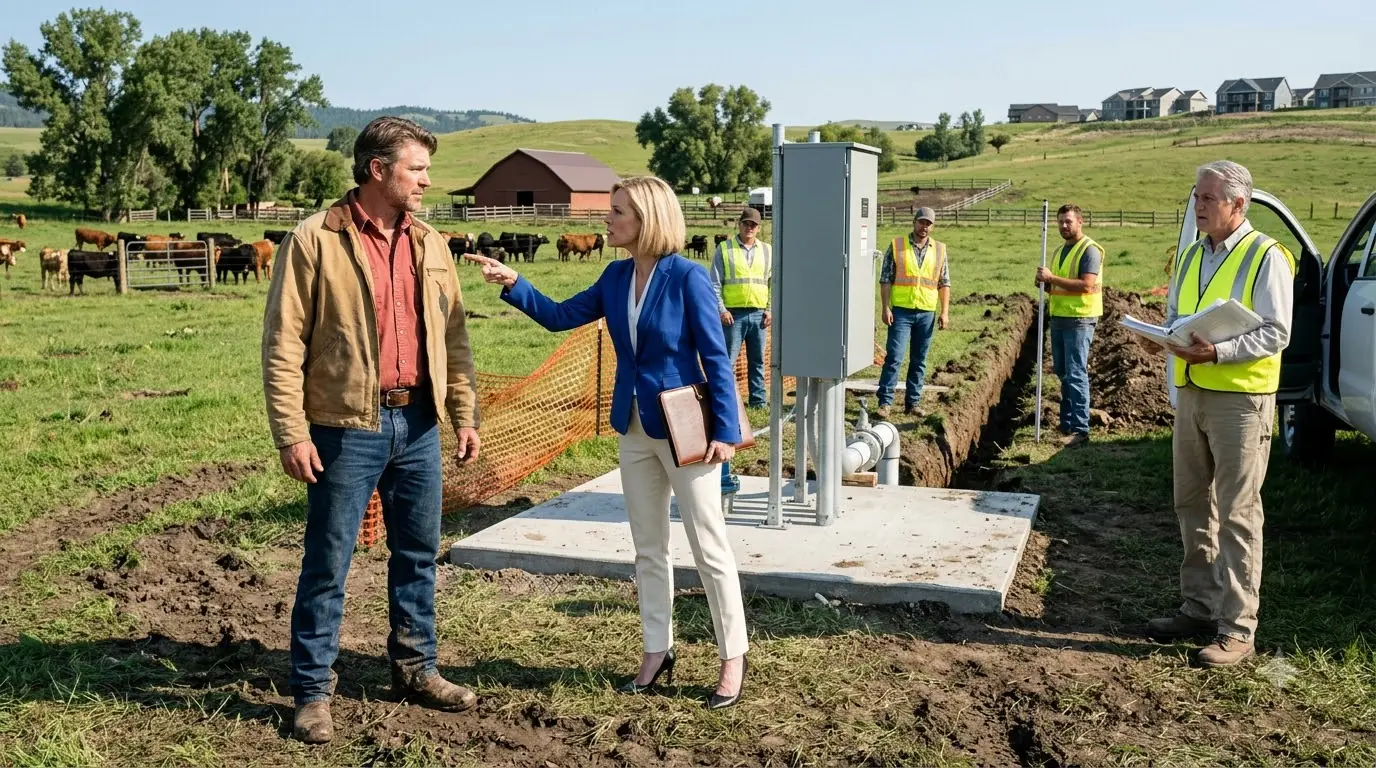
The woman in the cobalt-blue blazer stabbed one finger toward my chest as if the pasture, the excavator, the concrete slab, and the brand-new wastewater pump station behind her somehow belonged to her because she had arrived carrying a leather portfolio.
I kept my hands at my sides.
“You built this on my property.”
Monica Vale laughed.
Not nervously.
Not because she thought I was joking.
She laughed the way somebody laughs when a child has misunderstood something obvious.
“The board handled everything.”
Behind her, the pump station hummed faintly on a fresh concrete pad where grass had been less than forty-eight hours earlier. Gray conduit climbed into a metal control cabinet, orange construction mesh surrounded the site, and a newly opened trench cut through the east pasture like somebody had dragged a knife across a green tablecloth.
Excavator tracks crossed the cattle lane.
A section of my fence had been removed.
Four contractors stood inside my ranch as though they had parked at a job site they had been working for months.
Then a white county truck came through the opening.
The inspector stepped out.
He did not look at me first.
He looked at the pump station.
Then at the trench.
Then at the temporary survey stake near the concrete.
He opened a folder.
His expression changed.
Monica noticed.
“This installation is approved.”
The inspector looked up.
“I didn’t ask whether the project was approved.”
He pointed toward the station.
“I’m asking why it’s here.”
That was the first moment the confidence left Monica Vale’s face.
My name is Wade Harland.
I had owned Harland Creek Ranch for nineteen years, and until that morning I had never seen HOA infrastructure sitting in the middle of my cattle pasture.
I had also never imagined I would eventually sit in a county records office reading an email in which the president of Redstone Crest Homeowners Association complained that moving the pump station back onto land her association actually owned might cost more than eighty thousand dollars.
But that comes later.
To understand how absurd that morning was, you need to understand the ranch.
Harland Creek was not enormous.
Two hundred seventeen acres.
Enough to run a modest cow-calf operation if you managed grass carefully and did not pretend weather respected your budget.
The property sat below a rocky ridge outside a growing county in Colorado.
My land was older than most of the development around it.
The ranch house dated to the 1940s.
The barn had been rebuilt twice.
An irrigation ditch crossed the lower ground.
The east pasture rose gradually toward the subdivision now known as Redstone Crest.
When I bought the ranch, there was no Redstone Crest.
There was sagebrush, rock, an abandoned horse paddock, and a dirt road that ended at a gate nobody used.
I was thirty-six then.
I had spent fifteen years working cattle on other people’s land, repairing equipment, hauling hay, taking seasonal construction jobs in winter, and saving whatever survived rent, food, and old-truck repairs.
Earl Danner owned the ranch.
He was seventy-three.
Widowed.
No children who wanted cattle.
I had worked for him occasionally and knew he was thinking about selling.
The first time I asked what he wanted for the place, he laughed.
“You?”
“Yes.”
“You have money?”
“Some.”
“How much?”
“Not enough.”
“At least you're honest.”
We talked for six months.
I borrowed heavily.
Put nearly everything I owned into the down payment.
Earl carried part of the note himself.
For the first seven years, I worried about money every morning before breakfast.
Eventually the operation stabilized.
Not rich.
Never rich.
But mine.
That mattered.
Every acre had a job.
The west meadow produced hay.
The north paddocks were spring grass.
Lower ground handled part of summer rotation.
The eastern strip, the one Redstone Crest would later treat like vacant land, was critical to moving cattle between two larger grazing areas without putting livestock onto the county road.
A shallow buried water line crossed part of it.
So did a compacted cattle lane.
Nothing about the field looked valuable from a subdivision balcony.
No house.
No landscaping.
No pool.
Just grass.
That is the dangerous thing about working land near development.
People who do not understand it often mistake “undeveloped” for “unused.”
Redstone Crest began construction eleven years after I bought the ranch.
At first I did not care.
The developer owned the ridge.
If people wanted expensive houses with views of cattle, good for them.
I even sold the original developer a narrow temporary construction access license for six months so trucks could reach one area without damaging the county shoulder.
The agreement had dates.
Insurance requirements.
Restoration terms.
Payment.
Most importantly, an expiration.
When it ended, they restored the access.
That was how property arrangements were supposed to work.
Ask.