The morning in downtown San Francisco arrived cold and silver.
Low clouds pressed over the city, turning the bay into a sheet of dull metal. Wind moved between the towers and sent dry leaves skittering across Market Street.
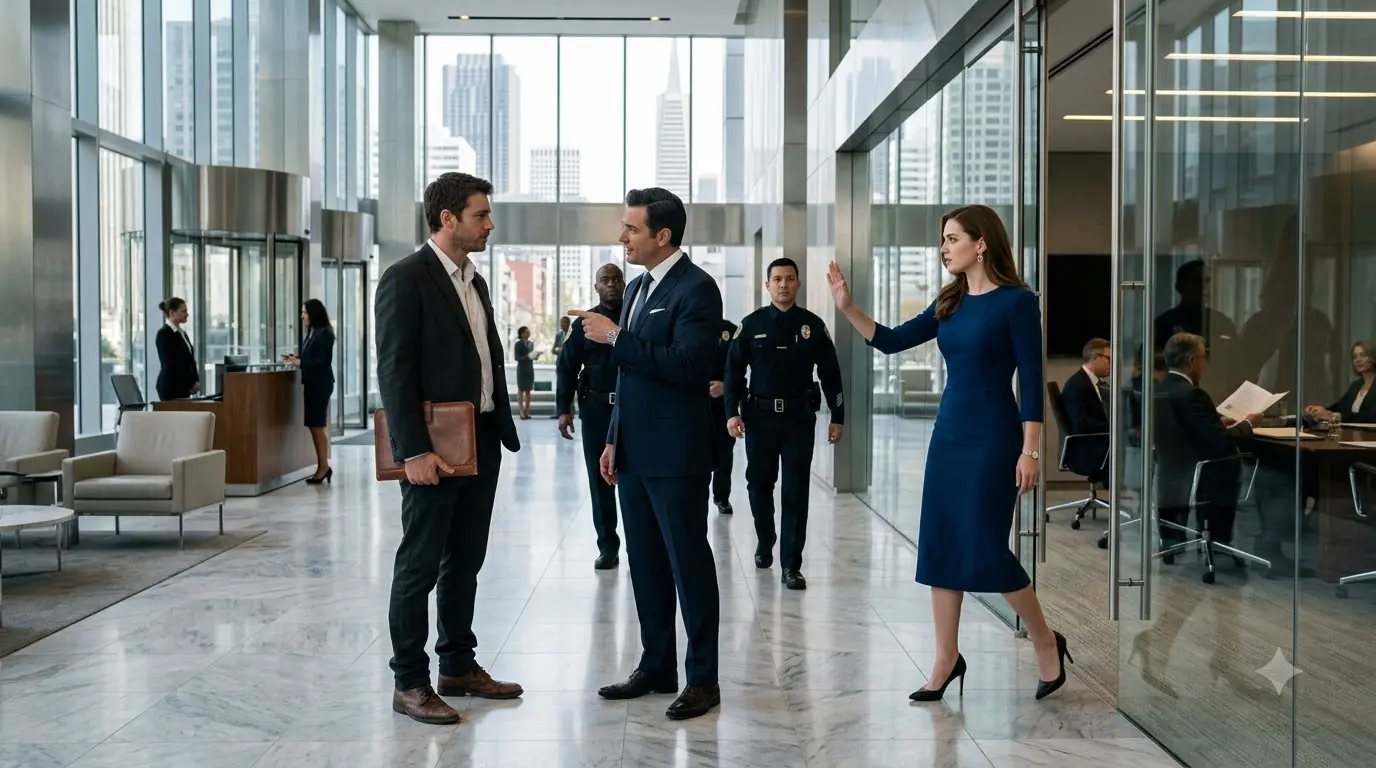
Mercer Meridian Tower rose sixty-four floors into the slate-colored sky.
Its exterior was all glass, steel, and pale stone, designed to look as though it had grown naturally from the financial district.
Inside, the lobby was almost painfully perfect.
White marble.
Brushed aluminum.
Huge windows.
Security gates polished often enough to reflect shoes.
Employees crossed the floor carrying laptops, coffee, and the practiced urgency of people who believed being busy was visible proof of importance.
A silver installation stretched across the main wall behind reception.
MERCER MERIDIAN
Beneath the name, smaller letters read:
BUILDING ENERGY SYSTEMS FOR A STRONGER WORLD.
Almost nobody walking past those words remembered where they had come from.
Almost nobody remembered Rosalind Mercer standing inside a rented warehouse in Colorado fifteen years earlier, holding a flashlight while Dante Mercer tightened a battery enclosure at two in the morning.
Almost nobody remembered Henry Lawson sleeping under a folding table because he refused to leave the first prototype unattended during its overnight pressure test.
Almost nobody remembered that the company had once existed for places investors could not find on a financial map.
Rural hospitals.
Small schools.
Emergency shelters.
Communities where a storm could destroy electricity for three days and no television camera would arrive.
The building remembered none of it.
Buildings rarely do.
At 8:12 that morning, the revolving doors turned.
A man entered holding the hand of a six-year-old girl.
He was twenty-nine years old.
Tall.
Broad through the shoulders.
Dark hair cut simply.
A charcoal coat hung over a white shirt that had wrinkled during the early flight.
His leather shoes were clean but worn down at the heels.
In his left hand, he carried a weathered leather folder.
In his right, the small hand of his daughter.
Matilda Mercer wore a pale blue cardigan, navy leggings, and sneakers with tiny silver stars on the sides.
Her hair had been brushed on the airplane and had already escaped the braid her father attempted at five-thirty that morning.
Under one arm, she carried a stuffed rabbit named Bluebell.
The rabbit had one ear slightly flatter than the other because Rosalind Mercer had sewn it back on when Matilda was still a baby.
Matilda looked around the lobby.
Her eyes widened.
Then she saw the silver letters.
MERCER MERIDIAN.
She sounded them out quietly.
“Mercer.”
Then:
“Meridian.”
She tugged her father’s sleeve.
“Daddy?”
Dante stopped.
Matilda pointed.
“Is this the company Mommy used to talk about?”
For several seconds, Dante said nothing.
Five years had passed since he stood inside this lobby.
The lobby had looked different then.
Less marble.
More wood.
Rosalind had insisted the original ground floor contain benches comfortable enough for maintenance workers to sit on during breaks.
Henry had complained about every decorative expense.
Dante had laughed.
They had been younger.
Alive in ways he had not appreciated.
Dante looked at Matilda.
“Yes.”
Her face brightened.
“Did Mommy work here?”
“Before this building existed.”
“Where?”
“In a warehouse.”
“What’s a warehouse?”
“A place with worse coffee.”
Matilda accepted this explanation.
Then she looked around again.
“Did she make all this?”
Dante swallowed.
“She helped make what came before it.”
Matilda hugged Bluebell closer.
Dante squeezed her hand.
Then they walked toward reception.
Behind the desk sat Constance Whitaker.
She was fifty-eight and had worked at Mercer Meridian for fourteen years.
Silver hair was pinned neatly behind her ears.
She wore a dark green jacket and rectangular glasses.
Constance had started as a receptionist when the company still occupied two floors of a converted industrial building.
She had watched executives arrive and leave.
She had watched venture capital enter.
She had watched the logo change three times.
She had watched employees stop calling Dante by his first name and start calling him Mr. Mercer.
She had also been standing in this lobby five years earlier on the day he left.
Rosalind had already been dead nine months.
Henry had been dead six weeks.
Dante had walked through the revolving door alone.
He had not returned.
Until now.
Constance recognized him immediately.
Not because he looked exactly the same.
He did not.
Grief had changed his face.
Fatherhood had changed him more.
She recognized the gesture.
Dante’s right hand resting lightly on Matilda’s shoulder while they waited.
Rosalind used to do the same thing with Dante when photographers crowded them.
Grounding.
Quiet reassurance.
Constance’s hands stopped above the keyboard.
Dante met her eyes.
Neither reacted.
That was enough.
Some people walked back into their own buildings expecting recognition.
Others came back as strangers because they needed to know what happened when nobody recognized them.