Even then, Ava thought her mother was talking about the past.
Ryan learned their kitchen by heart. He knew which drawer held the good corkscrew. He knew Diane preferred the end slice of the roast. He knew Lily would pick at salad and then eat half of someone else’s bread. He knew Ava went quiet when she was angry, and he used that knowledge the way a decent husband should: to stop, to ask, to repair. The tragedy is that the same knowledge can be used another way. A man who knows how a family reads faces can hide inside the reading.
On Ava’s twenty-sixth birthday, Diane hosted dinner at the long table. Lily brought a cake that leaned. Ryan gave Ava pearl studs that looked, to anyone who knew Diane’s jewelry box, like a younger echo of her mother’s earrings. Ava wore them the next morning. Diane noticed and said nothing, which Ava took as approval.
Later she would wonder whether her mother had noticed other echoes sooner than anyone admitted.
But wonder is a luxury that comes after the plates are cold. On the night that matters, no one was wondering yet. They were only eating. They were only passing dishes. They were only living inside the old belief that a family dinner is the safest place in an American house.
Chapter Four
The Year Everything Looked Fine
The year before the dinner was the most convincing year of all.
That is how these stories work in real life. They do not announce themselves with storm clouds over the roof. They announce themselves with a calendar that looks full and a marriage that looks tended and a sister who still has a key.
Ava and Ryan talked about buying. They walked through open houses on Sundays and criticized other people’s backsplashes like people who planned to last. They stayed for dinner at Diane’s more often, because Diane said the house was too quiet, and because Ava still felt responsible for the quiet. Lily got a better job and a worse boyfriend and then no boyfriend. She started coming to Diane’s on weeknights “just to eat something that isn’t a package.” Ryan started coming too, if Ava had to work late. No one thought this was strange. It would have been strange if he had not.
There was a Saturday in October when the four of them raked leaves in Diane’s yard. The photograph from that afternoon — Diane later had it printed, because she still believed in printed photographs — showed Ava laughing with a rake in her hand, Lily wearing Ryan’s flannel over her dress, Ryan carrying two paper bags at once, Diane standing a little apart with her pearls and a thermos. It looked like a catalog for a life. People who saw it on the sideboard said, “What a family.”
Lily had begun to change by then, but the change was small enough to misname. She was tired. She was picky about food. She skipped wine and said she was being good. Ava, who loved her, said, “Finally.” Diane looked at Lily across the kitchen island and asked if she was sleeping. Lily said she was fine. Ryan, near the sink, rinsed a glass longer than the glass required.
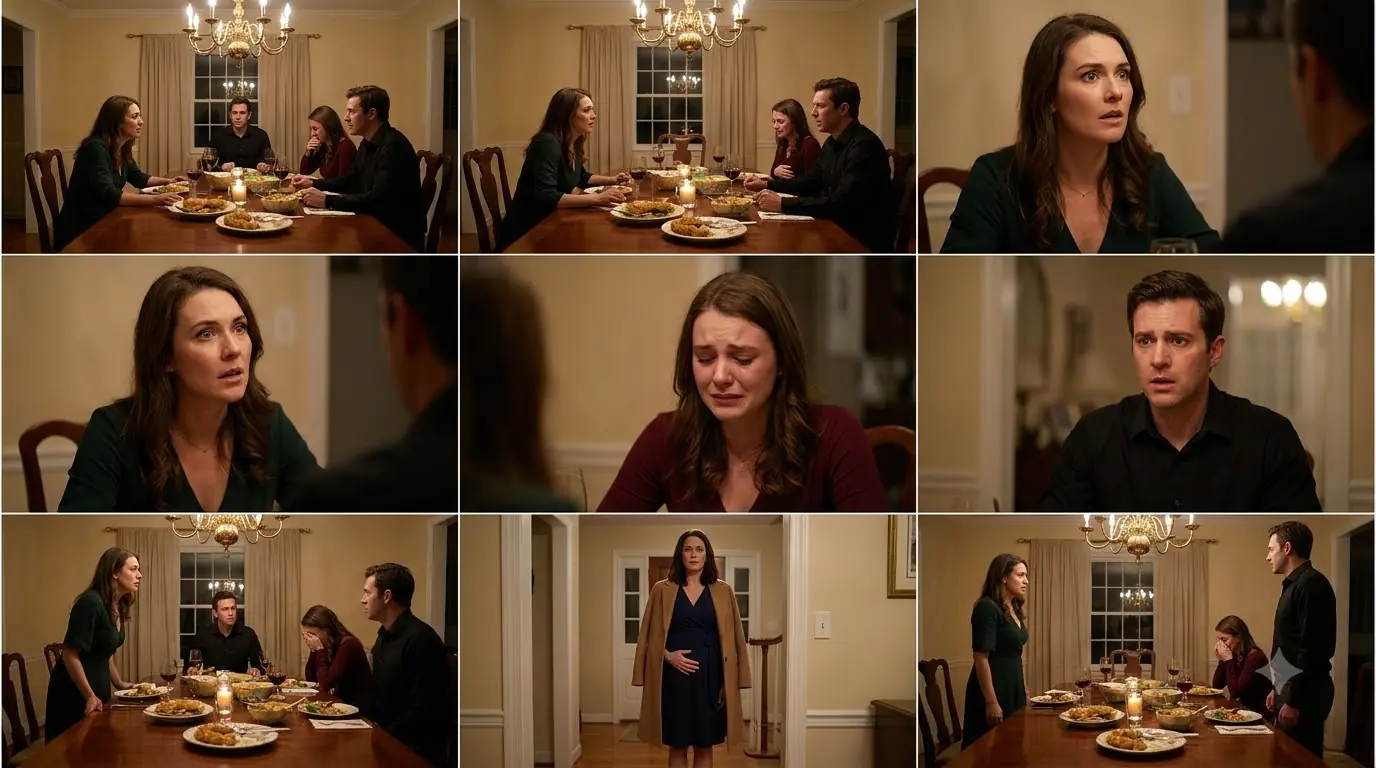
In November, Ava found Lily already at the house when she arrived with groceries. Lily was sitting at the dining table in daylight, which was unusual. That room was for evenings. Lily had her palm on her stomach in an absent way, as if she were holding a thought in place. When she saw Ava she took the hand away and smiled too quickly.